
Generator14/11/2026
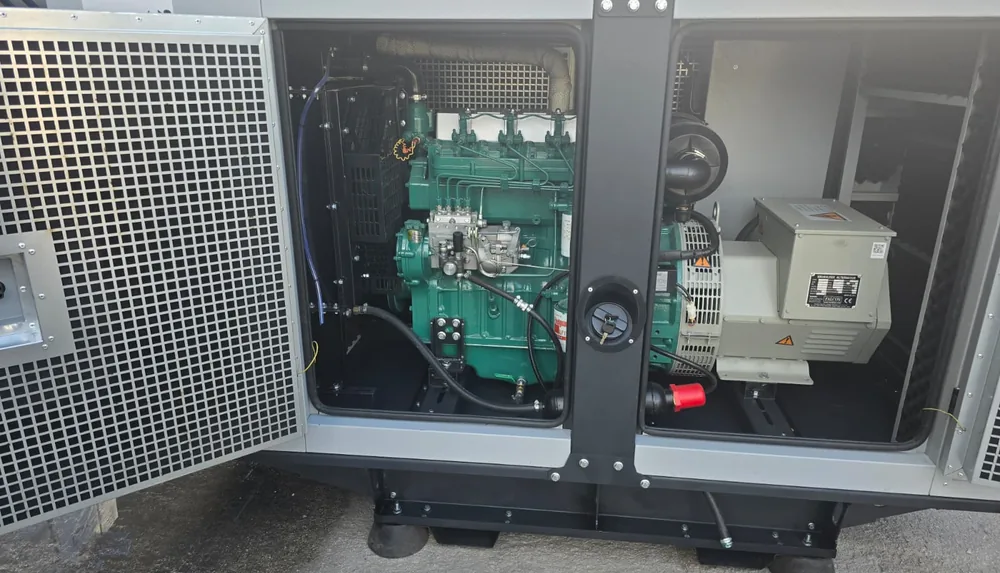
Diesel generator fuel consumption depends on the size of the generator and on how much load it carries. According to the factory datasheets of Erk Power’s 25–1100 kVA models, a diesel generator burns about 0.18 litres of diesel per kVA per hour at full load. At 75% load this falls to 0.135 litres, and at 50% load to 0.09 litres.
Instead of estimates, this article shares the actual consumption figures from the technical datasheets of the generators we build at our factory in Kahramankazan, Ankara. Alongside the chart you will find how to work out your own generator’s consumption, how long a tank lasts, a cost example and the mistakes that push consumption up.
How Many Litres of Fuel Does a Generator Burn per Hour?
Two things determine a diesel generator’s hourly consumption: its rated power and the share of that power your load actually draws. The same 100 kVA generator burns far less with only the lighting on than with lifts, air conditioning and pumps all running together.
Dividing our datasheet figures by kVA gives a remarkably consistent ratio:
| Load | Consumption per kVA per hour | For a 100 kVA generator |
|---|---|---|
| 50% load | ≈ 0.09 litres | ≈ 9 litres/hour |
| 75% load | ≈ 0.135 litres | ≈ 13.5 litres/hour |
| 100% load | ≈ 0.18 litres | ≈ 18 litres/hour |
This rule is good enough for early estimates and budgeting. For an exact figure, look up the model’s datasheet value in the chart below. Small sets and different engine brands can deviate by a few per cent.
Diesel Generator Fuel Consumption Chart by kVA
The figures below come from the 2026 technical datasheets of our Baudouin-powered diesel generator sets. We chose a single engine series so that the whole range from 25 to 1100 kVA can be compared on the same measurement basis. Tank capacity is the standard fuel tank stated on the datasheet.
| Model (standby kVA) | Standby kW | 50% load (l/h) | 75% load (l/h) | 100% load (l/h) | Standard tank (l) | Run time at 75% load |
|---|---|---|---|---|---|---|
| 25 kVA | 20 | 2.3 | 3.4 | 4.5 | 65 | ≈ 19 h |
| 35 kVA | 28 | 3.2 | 4.7 | 6.3 | 120 | ≈ 25 h |
| 44 kVA | 35 | 4.0 | 6.0 | 8.0 | 120 | ≈ 20 h |
| 55 kVA | 44 | 5.0 | 7.5 | 9.9 | 120 | ≈ 16 h |
| 70 kVA | 56 | 6.3 | 9.5 | 12.7 | 120 | ≈ 12.5 h |
| 88 kVA | 70 | 8.0 | 11.9 | 15.9 | 120 | ≈ 10 h |
| 110 kVA | 88 | 9.9 | 14.9 | 19.9 | 140 | ≈ 9.5 h |
| 150 kVA | 120 | 13.6 | 20.3 | 27.1 | 250 | ≈ 12 h |
| 220 kVA | 176 | 19.9 | 29.8 | 39.8 | 250 | ≈ 8.5 h |
| 275 kVA | 220 | 24.9 | 37.3 | 49.7 | 370 | ≈ 10 h |
| 300 kVA | 240 | 27.1 | 40.7 | 54.2 | 370 | ≈ 9 h |
| 400 kVA | 320 | 36.2 | 54.2 | 72.3 | 440 | ≈ 8 h |
| 500 kVA | 400 | 45.2 | 67.8 | 90.4 | 440 | ≈ 6.5 h |
| 660 kVA | 528 | 59.7 | 89.5 | 119.3 | 495 | ≈ 5.5 h |
| 825 kVA | 660 | 74.6 | 111.9 | 149.2 | 495 | ≈ 4.5 h |
| 1000 kVA | 800 | 90.4 | 135.6 | 180.8 | 650 | ≈ 5 h |
| 1100 kVA | 880 | 99.4 | 149.2 | 198.9 | 650 | ≈ 4.5 h |
Note one trend in the chart: from 500 kVA upwards, the standard tank lasts only 4 to 6.5 hours at 75% load. Sites that face long outages, such as data centres and hospitals, need an external day tank or a bulk tank at these ratings. Figures for other models are in our e-catalog and in the datasheets on each product page.
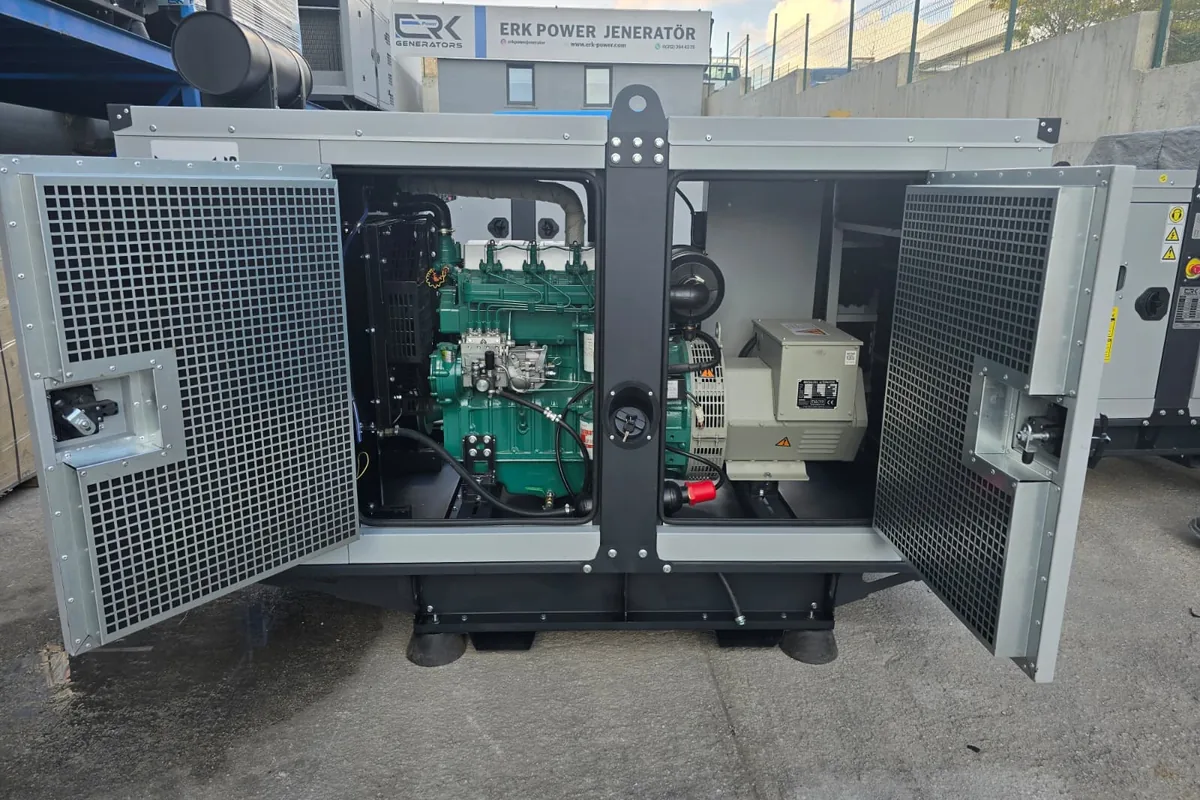
How to Calculate Your Own Generator’s Consumption
You can make a realistic estimate in three steps:
- Find your average load. Add up the power of everything that will run during an outage. Our power calculator helps with this.
- Work out the load factor. Divide the average load by the generator’s kVA. If you draw 225 kVA on average from a 300 kVA generator, your load factor is 75%.
- Read the consumption from the chart or the rule. 300 kVA at 75% load: 40.7 litres per hour. Check with the rule: 300 × 0.135 = 40.5 litres.
Example Cost Calculation
Suppose a factory’s 300 kVA generator runs at 75% load for a total of 60 hours of outages a year:
- Annual fuel: 60 hours × 40.7 litres = 2,442 litres
- At an example price of 1.20 USD per litre: 2,442 × 1.20 = 2,930 USD
The price per litre here is only an example assumption; use your current local diesel price for your own budget. At full load the same generator would burn 3,252 litres a year, at half load 1,626 litres.
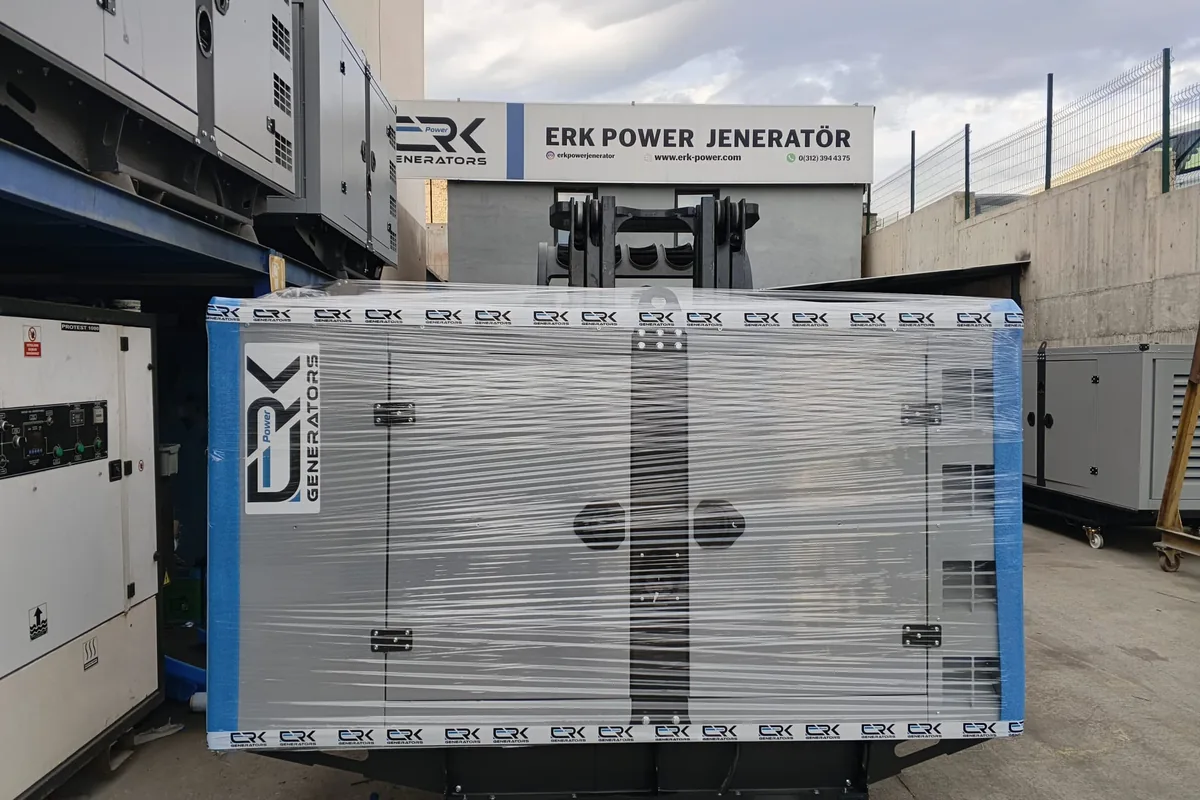
Six Factors That Increase Fuel Consumption
Datasheet values are measured under ideal conditions. On site, consumption can rise above them for these reasons:
- Wrong sizing: An oversized generator runs at low load all the time. When a diesel engine runs below about 30% load for long periods, fuel does not burn completely, deposits build up in the exhaust and efficiency drops. An undersized generator, on the other hand, is constantly overloaded.
- Clogged air filter: Without enough air, combustion suffers, consumption rises and black smoke appears.
- Dirty or wet fuel: Sediment and water in the tank impair injector performance. This is why Erk Power generators use cleanable steel tanks.
- Neglected maintenance: Oil and fuel filters that are not changed on time reduce engine efficiency.
- High altitude and temperature: Engine power is defined under specific ambient conditions according to ISO 3046. As altitude and temperature rise, the engine produces the same power less easily.
- Low power factor: In plants with many inductive loads, more current is drawn for the same kW and the generator works harder.
How Standby and Prime Ratings Affect Consumption
Our datasheets list two power ratings for each model. Standby power is backup power used for a limited time during mains outages, with no overload allowed. Prime power is continuous power under variable load; ISO 3046 allows a 10% overload within 12 hours of operation. Our 300 kVA model, for example, has a prime rating of 273 kVA.
If your generator will run continuously on a construction site or an off-grid facility, sizing it to prime power protects both fuel efficiency and engine life. For a backup generator that only starts during outages, standby power can be the basis.
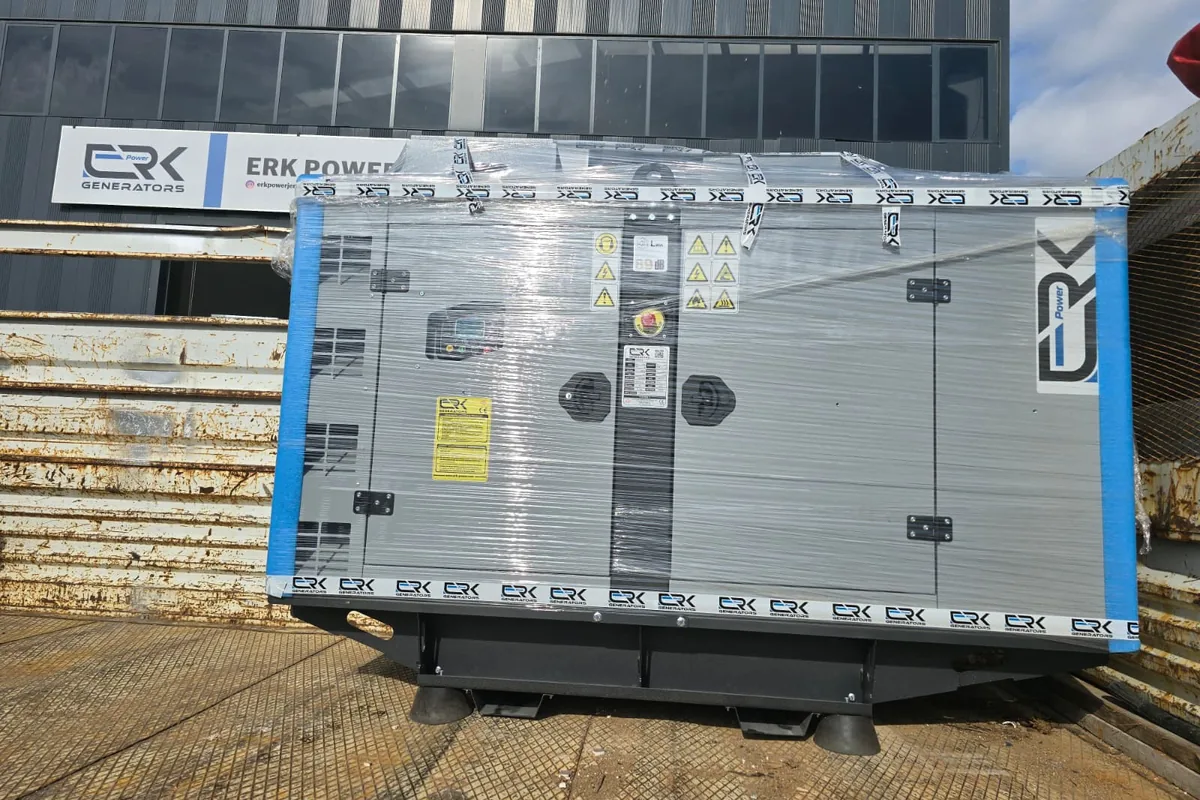
Fuel Planning for Long Running Hours
Where you cannot predict how long an outage will last, the fuel plan matters as much as the power rating:
- Set a target run time. At critical sites, tank volume is usually planned to last at least 8 to 24 hours at full load.
- Add an external tank. If the standard tank is not enough, a day tank or an underground bulk tank can be connected.
- Monitor fuel level remotely. The Datakom D-300 controller on Erk Power generators shows fuel level with an optional sensor and supports remote monitoring over Modbus or a GSM modem.
- Keep fuel fresh. In standby generators that run rarely, check the quality of the diesel in the tank regularly.
A generator sized correctly and paired with the right tank lowers both fuel and maintenance costs. If you would like us to work out the right model and expected fuel consumption for your site, fill in the quote form. Erk Power engineers will reply with a model and tank recommendation for your needs.
Frequently Asked Questions
How many litres per hour does a 100 kVA generator use?
A 100 kVA diesel generator uses roughly 18 litres per hour at full load, about 13.5 litres at 75% load and about 9 litres at 50% load. The exact figure can vary by a few per cent with the engine brand and model.
Does a generator use fuel when idling?
Yes. Even with no load connected, the engine keeps turning and burns fuel. Running a diesel generator idle or at very low load for long periods is not recommended, because fuel does not burn completely and deposits build up in the exhaust.
What affects fuel consumption the most?
Load factor has the biggest effect. It is followed by whether the generator is correctly sized, the condition of the air and fuel filters, fuel quality and ambient conditions.
Is real consumption the same as the datasheet figure?
Datasheet figures are measured under standard conditions and come very close on site for a correctly sized, well-maintained generator. Long periods at low load, poor maintenance or high altitude can push consumption above the datasheet value.
How many hours does a 1000 kVA generator’s tank last?
The standard tank of the Erk Power 1000 kVA model holds 650 litres. Since it burns 135.6 litres per hour at 75% load, the tank lasts about 5 hours. Sites needing longer run times should plan an external tank.
Which uses less fuel, a petrol or a diesel generator?
At the same power, diesel generators use noticeably less fuel than petrol models and last longer. That is why diesel generators are preferred wherever continuous or long running hours are needed.